
Imagine you’re in a coffee shop in Brooklyn at 8 a.m., briefly on a public Wi‑Fi, and you need to move funds between a custodial exchange and a privacy-focused wallet before the market moves. You want the transaction to leave as few traces as possible — no IP link, no metadata leak, no account tying the movement to your device. That realistic, time‑sensitive scenario reveals a cluster of trade-offs: network anonymity, on‑device secrecy, custody control, and the economics of swapping between coin types. Mobile privacy wallets address these dimensions with concrete mechanisms — but none are magic. Understanding how they work, where they fail, and how to operate them safely is the single most useful thing a privacy‑minded user can do.
In this article I unpack the mechanisms that underlie anonymous transactions and in‑wallet exchanges on modern multi‑currency mobile wallets. I’ll compare their protections (Tor, subaddresses, shielded pools), enumerate what they cannot hide (behavioural patterns, exchange counterparties, certain OS leaks), and give a reusable decision framework so you can choose operational practices that match your threat model. Along the way I’ll use examples grounded in current wallet capabilities — device hardware protections, decentralized routing, mandatory shielding for some coins, and open‑source non‑custodial designs — and explain the practical implications for US users who need both convenience and measurable privacy.
How mobile wallets create anonymity: mechanisms and limits
Privacy in a wallet is layered. First, network anonymity separates the transaction from your IP; wallets that offer Tor‑only modes, I2P proxy support, and the ability to connect to custom nodes give users options to reduce network linkage. Second, protocol features like Monero’s ring signatures and stealth addresses, Litecoin MWEB, or Zcash shielded pools obfuscate on‑chain linkability. Third, on‑device protections — Secure Enclave on iOS, TPM on Android, PINs and biometrics — protect keys and local state from extraction. Finally, wallet architecture (open‑source, non‑custodial, zero‑telemetry) and hardware integrations (Ledger, air‑gapped Cupcake) reduce outsourcing and server‑side risk.
But each layer has boundaries. Network obfuscation hides the origin IP but not the fact of the transaction: if you often transact at a certain time or with a certain counterparty, pattern analysis can still identify you. Protocol privacy depends on the coin: Monero’s design keeps the private view key on device and uses subaddresses to partition receipts, reducing linkability; Litecoin via MWEB adds a privacy layer but requires the other party to cooperate or for you to use MWEB‑aware endpoints. Zcash’s requirement for mandatory shielding in some wallets prevents accidental transparent leaks on outgoing transactions, but differences across wallets can break compatibility — example: migrating ZEC from a Zashi wallet to another wallet may require manual transfer because of change‑address handling differences. These are not theoretical footnotes; they are concrete operational gaps that can cost users funds or leak privacy if mishandled.
Anonymous swaps inside the wallet: routing, counterparties, and measurables
Many modern wallets include built‑in swaps to avoid leaving the app and to reduce custody complexity. Decentralized routing systems (for example, NEAR Intents) automate pathfinding across market makers and liquidity providers. This reduces reliance on a single centralized exchange and can be faster and cheaper. However, routing does not erase the chain of counterparties: each hop is a potential privacy surface unless the protocol and counterparties support privacy by design. A swap that happens off‑chain via a market‑maker network or on automated liquidity contracts will have different leakage profiles compared to a pure atomic swap between two users.
Practical implication: an in‑wallet swap minimizes user friction and can lower exposure to centralized custody, but the user still needs to trust the swap’s privacy posture. Does the routing require KYC counterparties? Are swap quotes aggregated in a way that reveals order book behavior? How does the wallet handle logs, error reporting, and node selection? Open‑source, non‑custodial wallets with a strict zero‑telemetry policy reduce one class of risk: no server‑side transaction histories or device identifiers are kept. But they cannot alter external counterparties’ policies or the public blockchain’s observables.
Operational trade‑offs: custody, convenience, and attack surfaces
Every convenience feature adds a potential attack surface. Background synchronization (useful for Monero to stay up to date and to receive funds to subaddresses quietly) improves UX, but continuous network activity broadens exposure to network‑level correlation unless routed through Tor or I2P. Biometric unlock combines security and convenience, but biometrics are local authentication — not a replacement for secure backups. Hardware wallet integration (Ledger, Cupcake) materially raises the cost of key extraction, but pairing and firmware supply‑chain risks remain relevant.
Here’s a practical heuristic: separate everyday small‑value transactions from high‑value custody. Use a mobile wallet with strong privacy defaults (Tor/I2P, no telemetry, subaddresses for Monero) for day‑to‑day payments; keep larger holdings in hardware‑protected, air‑gapped storage and use deliberate migration procedures. If you must move Zcash and you have an older seed from a different wallet family, plan a manual transfer rather than relying on seed import; this is a documented incompatibility and not a speculative edge case.
Decision framework: match practices to your threat model
Not all privacy matters are equal. Decide by asking three questions: who is the adversary (casual observer, chain analyst, law enforcement, targeted hacker)? what outcome do you need (unlinkability, plausible deniability, secrecy of balance)? and what conveniences are non‑negotiable? If adversaries are casual, use Tor and subaddresses and prefer MWEB or shielded coins where available. If adversaries are targeted (device compromise possible), prioritize hardware wallets and air‑gapped signing. If you need cross‑chain liquidity while minimizing central exposure, prefer decentralized routing systems that avoid KYC and support native privacy features, and check whether those routes introduce new metadata leaks.
For US users the regulatory environment and payment rails shape practical choices. Using a decentralized swap network reduces custodial exposure but may involve on‑ramps and off‑ramps (fiat exits) that are on‑ramped by regulated entities. In practice, keeping swaps and custody within non‑custodial, audited, open‑source software and relying on Tor/I2P for network privacy is a defensible baseline; stronger protections should involve compartmentalization and hardware signing.
What typically breaks anonymity: five common failure modes
1) Network correlation: failing to use Tor/I2P or connecting to a default node that logs IPs. Wallets that permit custom node connections and Tor‑only mode reduce this risk. 2) Incompatible wallet formats: seed differences across wallet families (example: ZEC migration from Zashi) forcing manual transfers and raising the chance of human error. 3) Device compromises: malware or OS exploits can expose keys and metadata even when the wallet is well designed; hardware-backed key storage and biometrics limit but do not eliminate this. 4) Swap counterparty disclosure: using centralized exchanges or KYC market makers will create off‑chain records that connect identities to on‑chain movements. 5) Behavioral linkage: repeated patterns (same amounts, timing, or recipients) let chain analysts build probabilistic links despite protocol privacy.
FAQ
Q: If a wallet offers Tor, I2P, and custom nodes, am I anonymous by default?
A: Not necessarily. Those network options significantly reduce IP‑level correlation, but anonymity also depends on coin protocol features, how the wallet constructs transactions, the presence of hardware protection, and your behavioral patterns. Use Tor or I2P when you need network unlinkability, and combine them with protocol privacy (Monero, MWEB, Zcash shielding) and compartmentalized operational hygiene for stronger protection.
Q: Can I rely on in‑wallet swaps to preserve privacy when moving between BTC and XMR?
A: It depends. Decentralized routing can avoid centralized custody, which is good for privacy, but each counterparty in the routing path may see transaction amounts or timing. Some swaps can be structured to minimize disclosure; others cannot. If privacy is critical, consider splitting large swaps into multiple smaller, timed operations and prefer swap routes that do not require KYC counterparties.
Q: How should I handle Zcash migration if my old wallet is incompatible?
A: Because some wallets handle change addresses differently (a documented incompatibility exists when migrating ZEC from certain wallets), the safer option is to create a new wallet compatible with your target app and manually transfer funds. Test with a small amount first to ensure shielded addresses and mandatory shielding rules in the receiving wallet are functioning as expected.
Q: Is open‑source code alone a guarantee of privacy?
A: No. Open source improves auditability and trust, but privacy depends on configuration defaults, user behavior, and the ecosystem (nodes, counterparties, network). Combine open‑source wallets with zero‑telemetry policies, custom node selection, and hardware protections for a stronger posture.
Practical takeaways and what to watch next
1) Build predictable routines: use Tor/I2P for network privacy, segregate high‑value coins to hardware storage, and use subaddresses for incoming Monero payments. 2) Treat swaps as protocol decisions: prefer decentralized routing that avoids KYC and inspect whether swap providers leak metadata or require off‑chain identity. 3) Verify compatibility before migration: check coin‑specific caveats (ZEC seed incompatibility, MWEB awareness) to avoid forced manual transfers. 4) Test small: always trial new flows with small amounts.
Signal watchlist: adoption of privacy extensions by mainstream blockchains (more MWEB‑style options), the legal landscape in the US around privacy coin usage, and improvements in decentralized routing that minimize information held by intermediate market makers. These trends can change the practical calculus of which protections are sufficient for a given adversary.
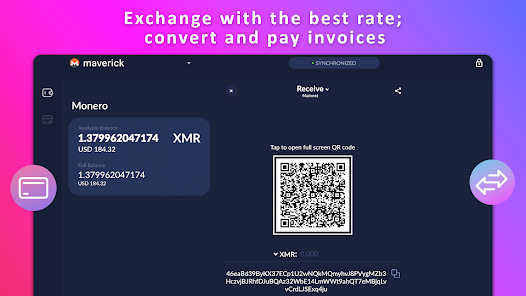
If you want a working example of a mobile app that bundles many of these capabilities — multi‑coin support including Monero, Tor/I2P options, hardware integration, and strict no‑telemetry defaults — consider installing a reputable privacy‑first wallet and testing the flows described here in a controlled way. A practical starting point for Monero users specifically is this well‑maintained monero wallet that exposes subaddresses, background sync, and keeps private view keys on device; it illustrates how design choices translate into real privacy gains and real operational limits.